


-Exploring the cosmic connection between astronomy and human imagination-
Stars hold a unique place in the vast expanse of the universe. They captivate both the natural world and the human imagination. These celestial bodies glitter like diamonds in the night sky. Throughout human history, they have been a source of fascination, wonder, and inspiration.
The beauty of stars combines science and culture. Each element adds depth and color to our understanding of the cosmos. These insights help us comprehend our place within it.
The Science of Stars: Illuminating the Universe
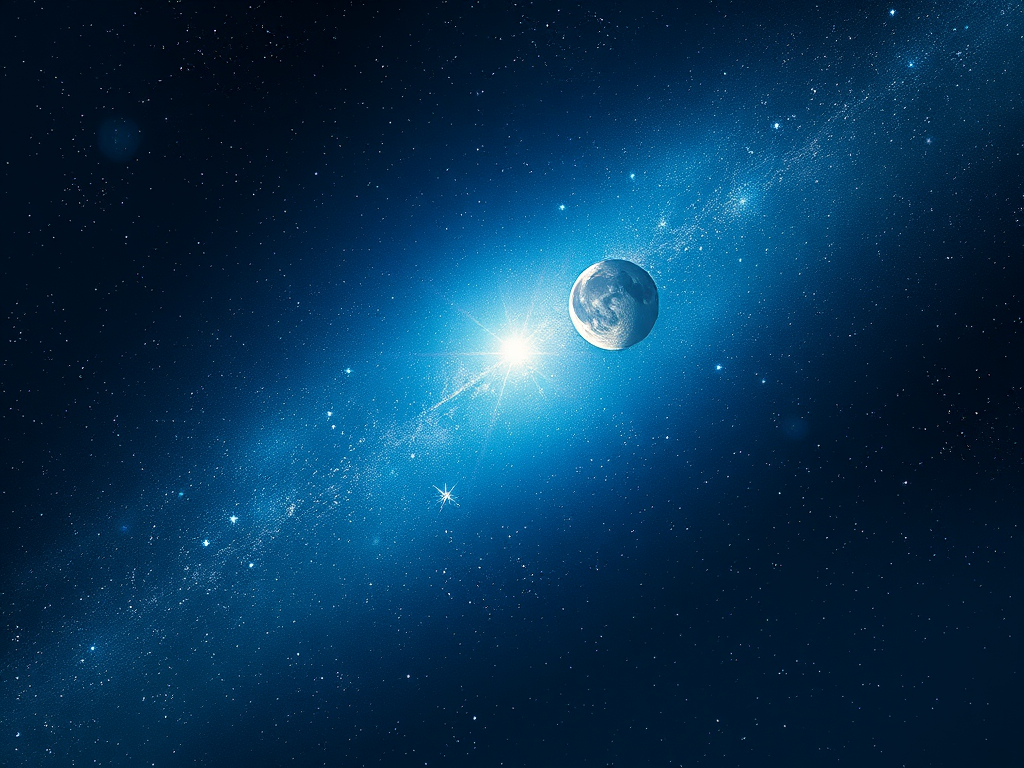
Stars are the building blocks of galaxies. They are the fiery forges where elements are born. Stars serve as the celestial lighthouses that guide astronomers through the universe. To appreciate their beauty, one must first understand their scientific significance.
Stars form from the gravitational collapse of gas and dust in space, igniting nuclear fusion reactions in their cores. This process releases immense energy, causing stars to shine brilliantly for millions or even billions of years.
From a scientific perspective, stars are not just points of light. They are complex phenomena. These complex phenomena reveal the secrets of the universe. By studying stars, astronomers have uncovered the life-cycle of stellar bodies.
This knowledge spans from the birth of a star in nebulae. It extends to its eventual death as a white dwarf. It also includes its transformation into a neutron star or black hole. This knowledge has profound implications. It helps us understand the composition of the universe. It also explains the origins of the elements that make up everything around us, including ourselves.
Stars in Culture: Guiding Lights and Mystical Symbols
While science unveils the physical nature of stars, culture imbues them with meaning and emotion. Since ancient times, humans have looked to the stars for guidance, inspiration, and connection to the divine. Stars have been used to navigate the seas, mark the passage of time, and tell stories that transcend generations.
In many cultures, stars are seen as the souls of ancestors, watching over the living from above. They are symbols of hope, dreams, and aspirations. Stars are often portrayed in literature, art, and music as beacons of light guiding us through the darkness.
The North Star, for example, has historically been a symbol of guidance and steadfastness. The constellation Orion has inspired myths and legends across the world.
The Starry Night: A Cultural Icon
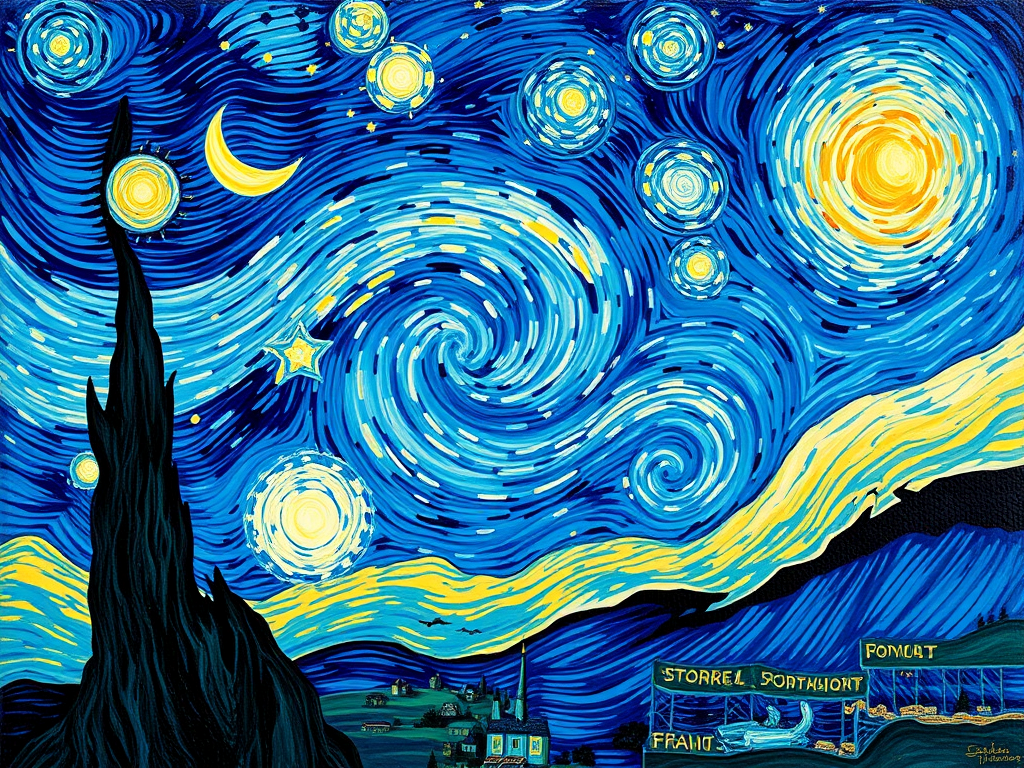
One can’t discuss the cultural impact of stars without mentioning Vincent van Gogh’s “The Starry Night.” This iconic beautiful painting captures the swirling, vibrant beauty of a star-filled sky.
It evokes a sense of wonder and emotion. This feeling transcends time and place. Van Gogh’s masterpiece serves to remind us of humanity’s deep connection to the cosmos. It shows how the beauty of stars can inspire profound artistic expression.
Types of Stars
Stars vary greatly in size, color, and temperature. Here are some common types:
- Main Sequence Stars: These stars, like our Sun, are in the most stable phase of their life cycle. They fuse hydrogen into helium.
- Red Giants: When main sequence stars exhaust their hydrogen supply, they expand and cool, becoming red giants. This phase is marked by increased luminosity.
- White Dwarfs: After shedding their outer layers, stars like our Sun will leave behind a hot core. This core is known as a white dwarf. It gradually cools over time.
- Neutron Stars and Black Holes: The remnants of massive stars explode in supernova events. These remnants can collapse into neutron stars. If the remnants are massive enough, they become black holes. These are regions in space with gravitational fields so strong that not even light can escape.
The Intersection of Science and Culture: A Celestial Symphony
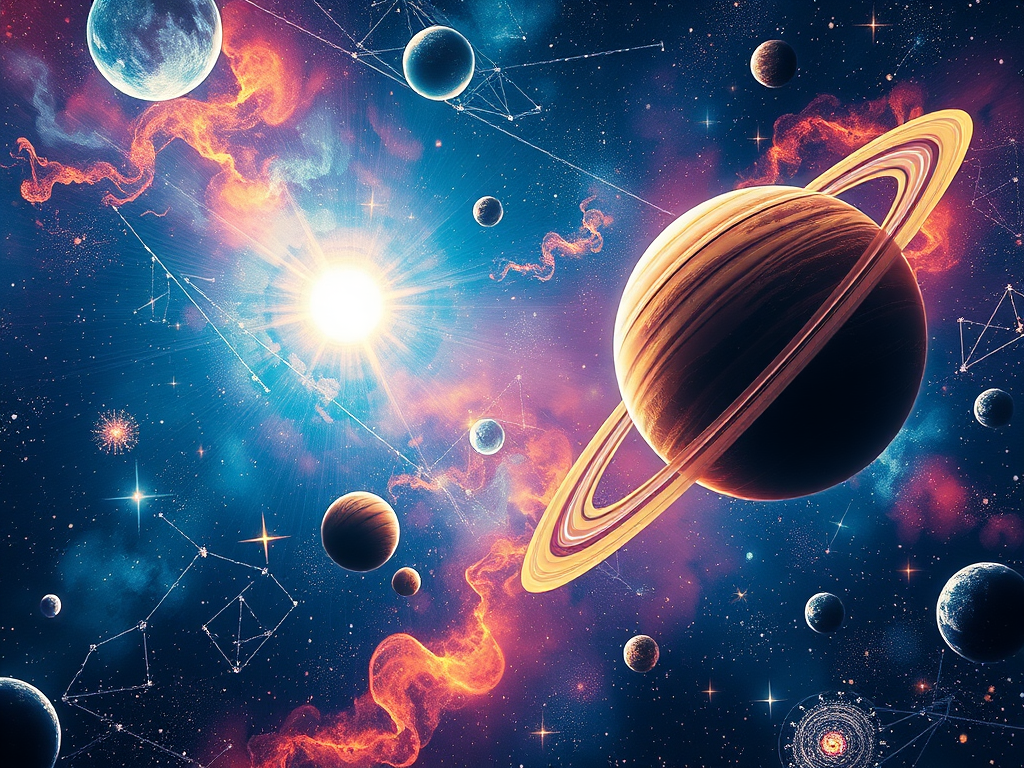
The beauty of stars emerges most vividly at the intersection of science and culture. This confluence creates a celestial symphony, where each note is a blend of scientific understanding and cultural significance. Events like solar eclipses, meteor showers, and the appearance of comets have inspired scientific inquiry. They also lead to cultural celebration. These events remind us of the awe-inspiring nature of the universe.
In modern times, initiatives like the International Dark-Sky Association strive to preserve the night sky. This ensures that future generations can continue to experience its beauty. These efforts highlight the importance of stars as scientific subjects. Stars are also cultural treasures that enrich our lives.
Conclusion: Stars as Eternal Beacons
The beauty of stars lies in their ability to bridge the gap between science and culture. They unite us in a shared appreciation of the universe. They are eternal beacons, illuminating our understanding of the cosmos while reflecting our deepest hopes and dreams. We gaze upon the night sky. It reminds us of our small yet significant place. We are part of the grand tapestry of existence. The allure of the stars is enduring.
For those eager to explore the mysteries of the cosmos even further, there is an opportunity. A free moon reading offers a unique perspective on how celestial bodies influence our lives. Discover more with your free moon reading and let the stars guide you.

I hope you like reading my blogs.
Thank You, and have a nice day!
Irene
 Hippos & Horoscopes
Leave a comment